
Habits: How They Form, Why They Stick, and How to Change Them
Most of what we do each day isn’t the result of deep thought or careful planning—it’s habit. Habits are automatic behaviors we perform regularly in response to cues. They can support our health and happiness, or quietly work against us. The good news is: once you understand how habits work, you can build better ones and replace the habits that aren’t serving you.
What exactly is a habit?
A habit is a behavior your brain learns to run on autopilot. Habits can be good or bad:
Good habits improve well-being—things like hand washing, brushing your teeth, wearing a seat belt, drinking water, and exercising regularly.
Bad habits tend to reduce well-being—like smoking, nail biting, overeating, endlessly scrolling your phone, or grinding your teeth.
No matter what kind of habit it is, the structure behind it is the same.
The Habit Loop: The engine behind every habit
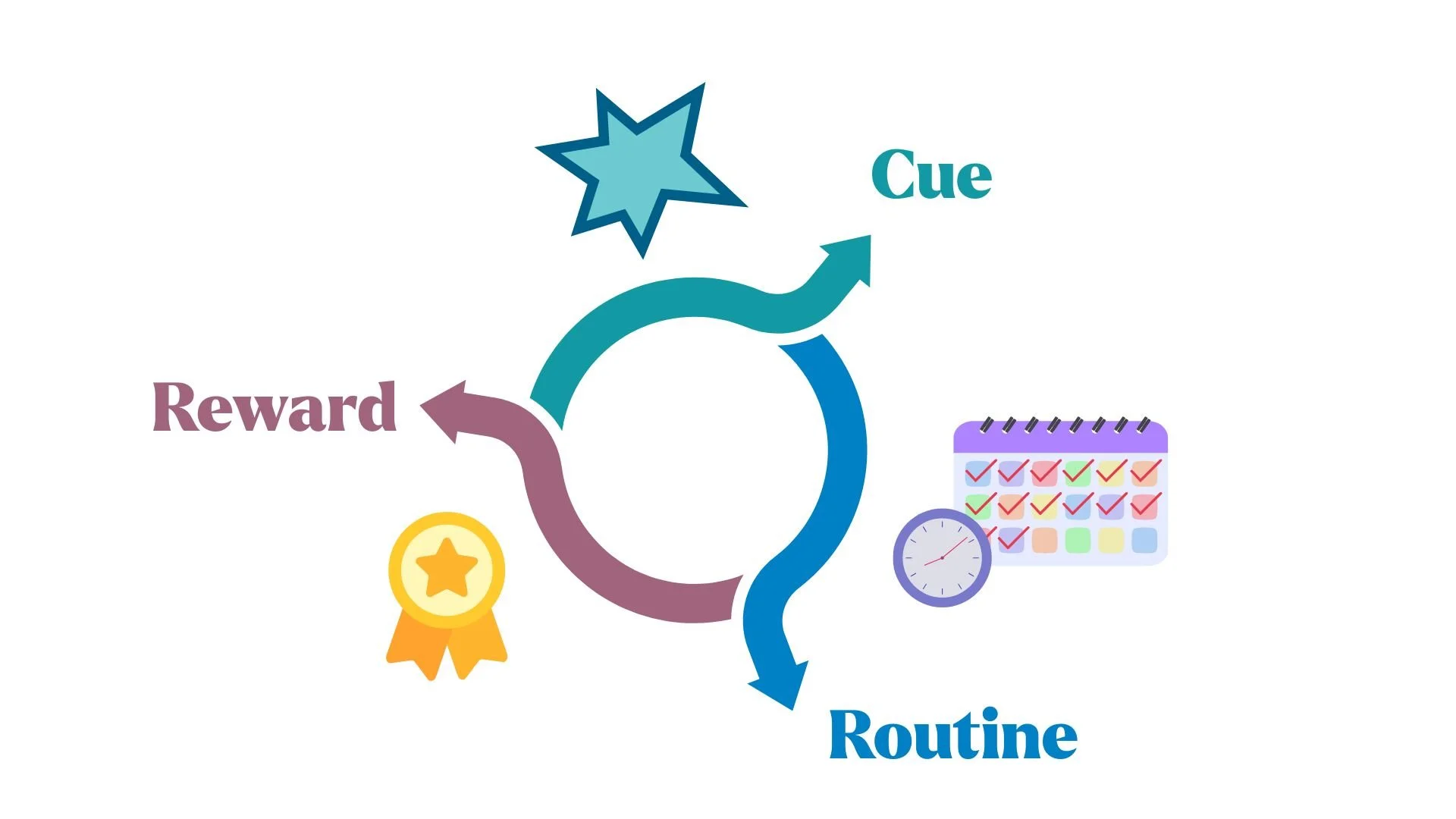
Habits are created through something called the Habit Loop, and it has three parts:
Cue
Routine (the behavior)
Reward
You need all three parts for a habit to form.
1) The Cue: what triggers the habit
The cue is the signal that tells your brain, “Time to run that automatic program.” Cues generally fall into five categories:
Time – habits tied to time of day (like brushing your teeth in the morning)
Location – habits tied to environment (like looking for a snack when you walk into the kitchen)
Preceding event – something that just happened (like finishing dinner and turning on the TV)
Emotional state – feelings that trigger behavior (like eating when stressed)
Other people – habits linked to the people around you (like drinking with certain friends)
2) The Routine: the habit itself
This is the actual behavior you do in response to the cue—the thing you want to build, change, or break.
3) The Reward: why your brain repeats it
The reward is the positive payoff your brain gets—something that makes it want to repeat the behavior.
For example:
Brushing your teeth → reward: clean mouth, fresh feeling
Scrolling your phone → reward: less boredom, distraction, entertainment
Rewards reinforce the loop. If the brain likes the reward, it keeps running the routine.
How to create a new habit (that actually sticks)
To build a new habit, keep it simple:
Choose the behavior you want to do.
Choose a cue that will reliably trigger it.
Make sure there’s a reward—even a small one—to reinforce it.
The easiest method: Habit stacking
One of the best ways to build a new habit is to stack it onto a habit you already have. That means you do the new habit directly before or after something you already do consistently.
Examples:
After I brush my teeth, I will drink a full glass of water.
After I start the coffee maker, I will stretch for two minutes.
After I sit on the couch, I will take five deep breaths first.
Habit stacking works because it:
Reduces decision fatigue by linking the habit to an automatic process
Increases consistency because it’s easier to remember
Builds momentum so you can gradually add more habits over time
Leverages neuroplasticity by using existing brain pathways to create new connections
Why bad habits are so easy to form (and hard to break)
If you’ve ever felt frustrated trying to change a habit, you’re not alone. Bad habits often form quickly and stick stubbornly for a few reasons:
Our brains are wired to seek rewards (dopamine plays a big role), which can lead to compulsive patterns.
Environment strongly influences behavior, and many environments aren’t supportive of change.
Good habits require mental energy, and we only have so much willpower and focus each day.
Past trauma and emotional wounds can reinforce unhealthy coping habits and keep us distracted from deeper discomfort.
Understanding this isn’t about making excuses—it’s about building a smarter strategy.
How to break a habit using the Habit Loop

To break a habit, use the same loop that created it.
Identify the habit you want to break (the routine).
Pinpoint the cue that triggers it.
Understand the reward you’re seeking.
To disrupt the habit, you only need to break one part of the loop—but the most realistic option is often to replace the routine.
Replace, don’t erase
Bad habits are most often replaced, not eliminated. Why? Because it isn’t always possible to remove the cue (time, location, emotions, other people). So instead, you can keep the cue and reward—but swap the routine.

Example:
Cue: stress
Routine: smoking
Reward: relief / calm
Replacement routine: chew gum + take a 10-minute walk (still aiming for relief)
When you insert a new routine between the cue and reward, you give your brain another way to get what it’s looking for—without the downside.
Goals vs. habits: what’s the difference?
People often focus heavily on goals, but habits are what make goals happen.
Goals are specific outcomes you want to achieve. They provide direction and motivation—but they can be temporary and often require willpower.
Habits are the consistent actions and routines that move you toward those goals. They’re ongoing, increasingly automatic, and rely less on motivation.
In other words: goals set the target—habits are the system that gets you there.
The takeaway
Habits aren’t about being “good” or “bad” at self-control. They’re a predictable brain process built on cue → routine → reward. When you understand the loop, you can:
build new habits intentionally,
strengthen good routines through stacking,
and replace harmful habits by swapping the routine while keeping the cue and reward.
Small changes repeated consistently don’t just add up—they reshape your life.