
The Missing Middle of Dementia Care
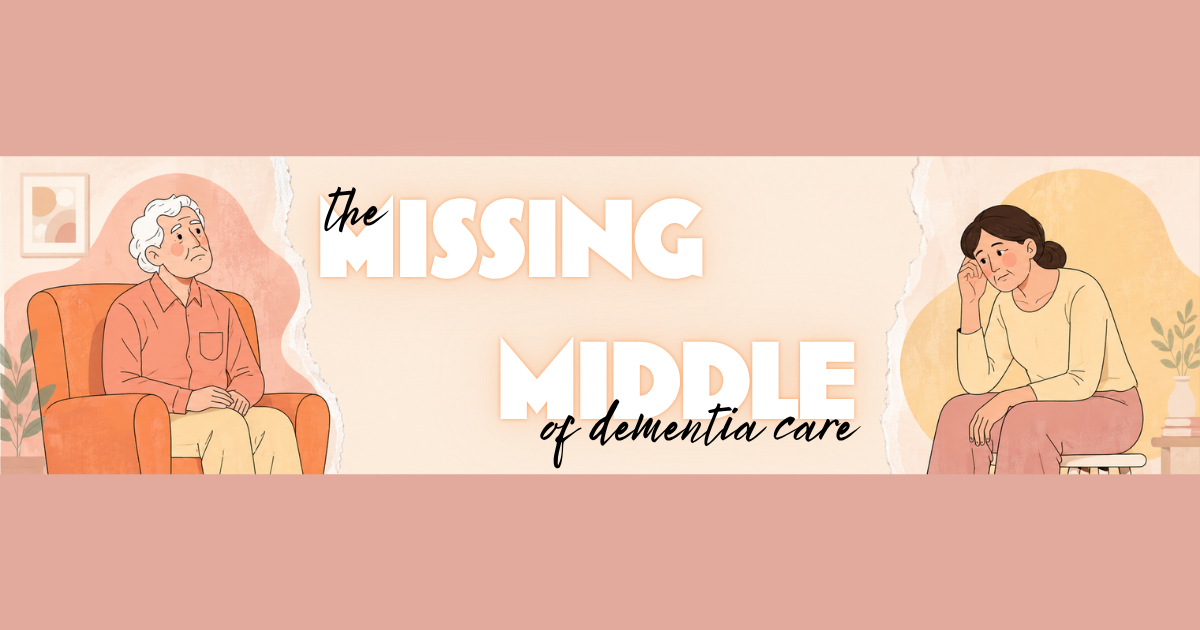
She loved her husband and wanted to keep caring for him at home. But as dementia changed the rhythms of their marriage, he increasingly wanted to be wherever she was, all the time. Eventually, the constant proximity became overwhelming.
“For God’s sake, I can’t even have a private moment alone,” she told the Thrivera team.
She wasn’t asking for 24-hour care. Her husband didn’t need someone to manage every part of his day. She simply needed a little room to breathe, and he needed something meaningful to do.
For Angela Evans, Chief Marketing and Sales Officer at Western Home Communities, that need is deeply personal. Her mother lived with dementia before her death last year, and as the disease progressed, Evans experienced how difficult it could be to find the right kind of support. People could come into the home to care for her mother, but they did not necessarily engage her in activities. Someone could be present without truly connecting with her.
It is an experience familiar to many families navigating dementia. The need is not always medical care or help with dressing, bathing or meals. Sometimes what is missing is engagement, purpose, movement and companionship. For the caregiver, it may simply be the freedom to step away for an hour knowing their loved one is not only safe, but meaningfully engaged.
“There’s a gap between getting the diagnosis and actually needing 24-hour care... there’s no roadmap for dementia.”
Western Home Communities was hearing versions of that story again and again: spouses navigating cognitive decline largely on their own, families unsure where to turn and caregivers becoming exhausted long before their loved one required around-the-clock care.
“There’s a gap between getting the diagnosis and actually needing 24-hour care… there’s no roadmap for dementia,” said Phoebe Thall, Thrivera Operations Coordinator.
That gap is the missing middle, the period when families need more support than they have but do not yet need the intensive care associated with later stages of dementia.
It raised a simple question. “What can we do?” asked Jacob Bates, Director of Thrivera Lifestyle.
It Started With a Walk
The first answer was not a new clinical service or complicated care plan. It was a walk.
The opportunity began with the Fortified Life member and her husband. Fortified Life members already have access to Thrivera services, but this particular kind of dementia support had not yet been formally developed. While the team began building a more complete program, they responded to the need in front of them.
They invited her husband to the wellness center, where a staff member could walk with him, talk with him and give him something purposeful to look forward to. For that hour, his wife had time to herself. He had movement, companionship and connection.
It was simple, but it worked. The focus was not on what he could no longer do. It was on what he enjoyed, what kept him engaged and what could bring more meaning to his day.
That experience became the starting point for a pilot program designed to explore what families needed between diagnosis and higher levels of care. As the team worked with the Fortified Life couple and other families, they began identifying the pieces a broader program would need.
One lesson quickly became clear: dementia rarely affects just one person. It also changes life for the spouse, family member or friend providing care. Caregivers manage appointments, routines, safety concerns and the emotional strain of watching someone they love change over time, often carrying that weight long before they ask for help.
Supporting the person living with dementia was only part of the answer. The caregiver needed support too, whether that meant time to run an errand, take a shower, sit quietly or simply step out of the caregiving role for a little while.
More Than Being There
Traditional home care frequently focuses on Activities of Daily Living, or ADLs, including dressing, hygiene, meals and safety. Those services can be essential, but families may need something different long before extensive hands-on care becomes necessary.
“Caregivers focus on taking care of people… not on the physical or mental side,” said Erika Kramer, Senior Director of Thrivera.
The pilot began exploring that additional layer. A wellness-trained Thrivera Fit team member could provide movement, cognitive engagement and meaningful connection, with activities shaped around the individual’s interests and abilities. Take-home activities could also give couples new ways to spend time together when dementia had made familiar routines more difficult.
The goal was not simply to fill time. It was to make that time meaningful.
For families like Evans’, that difference is significant. The pilot demonstrated that dementia support at home could be built around more than supervision. It could be built around the person.
The team also learned that support needs to begin earlier. Families may not know what resources exist, may believe help is something they will need later or may feel they should be able to manage on their own. Too often, they wait until exhaustion, isolation or crisis forces the next step.
“You don’t wait to set up a primary when you’re in the emergency room,” Bates said.
Earlier support gives families time to understand what engages their loved one, build relationships, connect with resources and make decisions without the pressure of a crisis.
The impact often appears in small moments. One participant regained confidence in walking with the encouragement of a wellness team member who became his “biking buddy.” For another family, support meant a spouse finally had enough time to shower, breathe and gather her thoughts while her loved one was engaged. One family told the team their mother was able to remain at home two years longer because support had been put in place early.
“The pilot demonstrated that dementia support at home could be build around more than supervision. It could be built around the person.”
These stories are not about curing dementia. They are about supporting life while it is still being lived, with purpose, connection and moments of joy.
From Pilot to Program
What began as a response to one Fortified Life family helped the team see that families were not simply looking for exercise, respite or someone to sit with a loved one. They needed a bridge between diagnosis and the higher levels of care that might eventually follow.
Those lessons are now shaping a broader program built around both the person experiencing cognitive change and the person caring for them.
Weekly in-home visits will combine physical movement with cognitive and intellectual engagement led by a Thrivera Fit team member, with activities adapted to individual interests and abilities. A weekly take-home activity will give participants and caregivers opportunities to connect between visits, while virtual fitness options, wellness resources and eligible community events offer additional ways to remain active and engaged.
“If we could bring more moments of joy and connection to people living with dementia while providing greater support and peace of mind to the people who love them, then we’re creating something I wish had been there for my mom and our family.”
Monthly lifestyle coaching will help families with wellness planning, caregiver support, resource navigation and connections to other services as needs change. The team is also developing family updates and exploring technology that could support activities, personal interests, resources and communication.
Together, those pieces recognize that the person living with dementia and the person caring for them are navigating the disease together.
The support itself can look remarkably ordinary: taking a walk, listening to music, playing a familiar game or finding something a couple can still enjoy together. It can mean having someone arrive who knows what brings a person joy and has planned something specifically for them. It can also mean giving a spouse an hour to simply breathe.
For Evans, the work carries another meaning. She knows what it is like to love someone with dementia and to wish there had been more opportunities to keep her mother engaged, connected and experiencing moments of joy as the disease progressed.
"I can’t change what my mom went through or what our family experienced because of dementia. But knowing that we may be able to spare another family some of that heartbreak and frustration means a great deal to me.
If we can bring more moments of joy and connection to people living with dementia while providing greater support and peace of mind to the people who love them, then we’re creating something I wish had been there for my mom and our family."
There is a long distance between hearing a diagnosis and needing 24-hour care. That is the missing middle. It is the period when someone may still be living safely at home, but dementia is already changing daily life, relationships and the demands placed on the person providing care.
The pilot showed Western Home Communities that filling that gap requires more than one service. It requires Connection, Navigation, Caregiver Support and Direct Support.
As the pilot becomes a formal program, the name Thrivera Connect reflects what it is designed to do: bring those four pillars together to help families navigate the missing middle and live well at home longer.
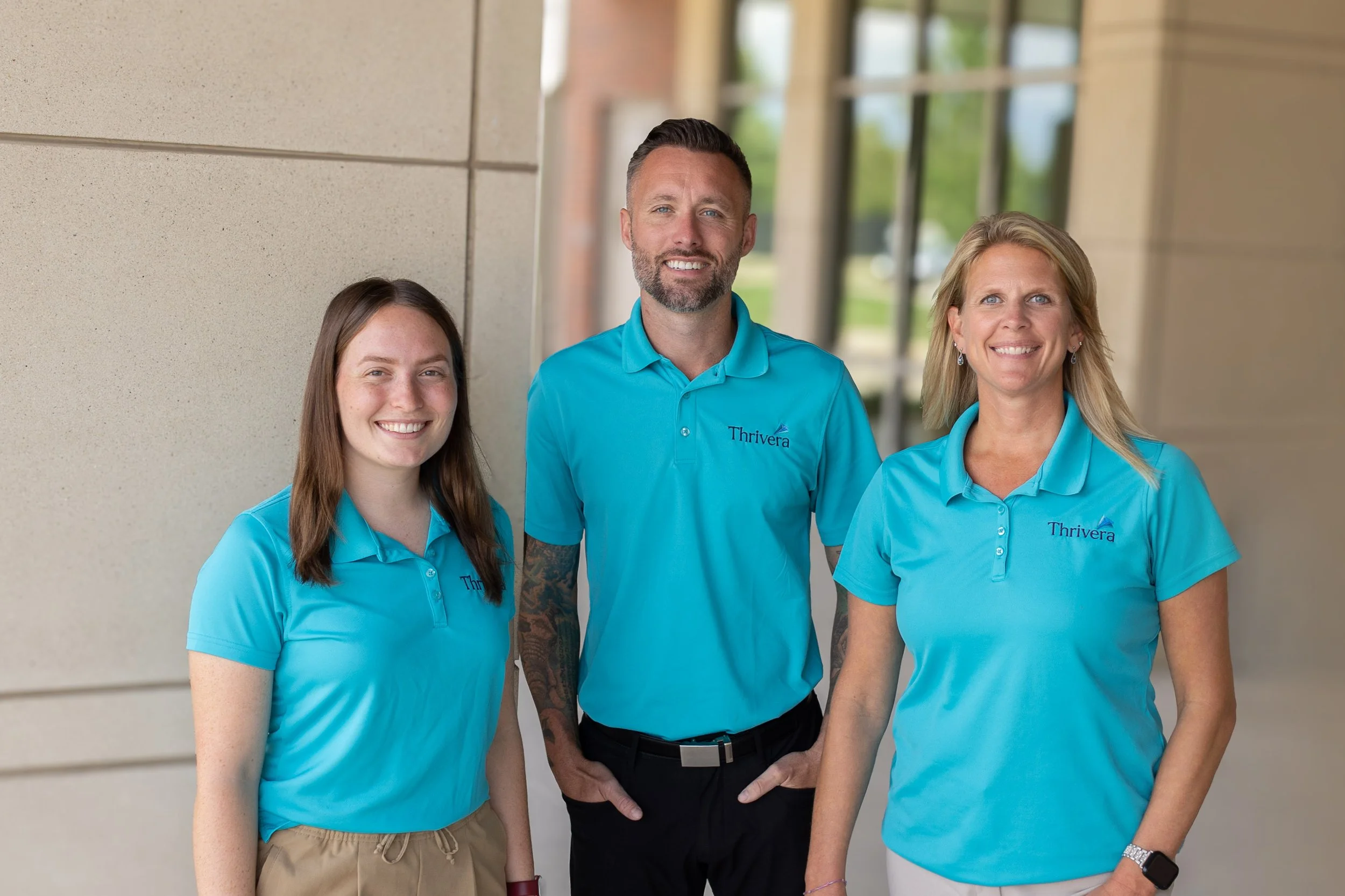
From left, Phoebe Thrall, Thrivera Operations Coordinator; Jacob Bates, Director of Thrivera Lifestyle; and Erika Kramer, Senior Director of Thrivera, are helping shape a new approach to dementia support.